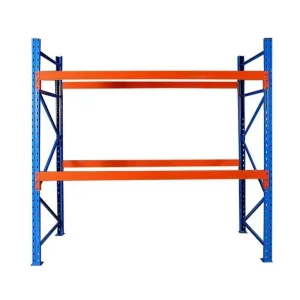
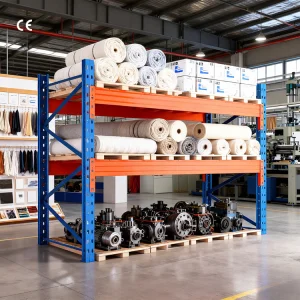
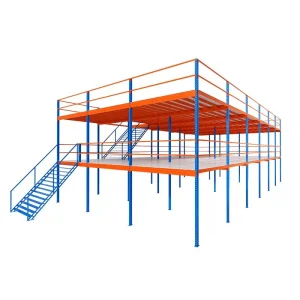
Precision-engineered industrial racking solutions optimized for structural integrity and high space-utilization ratios.
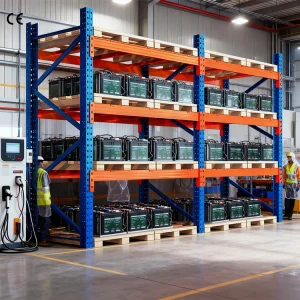
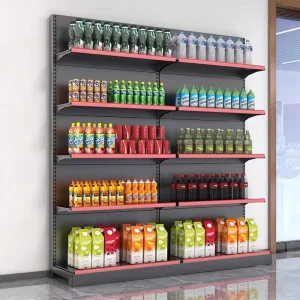
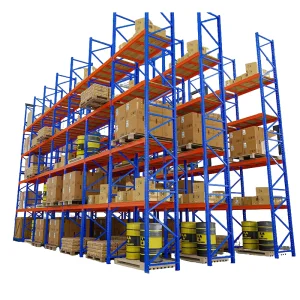
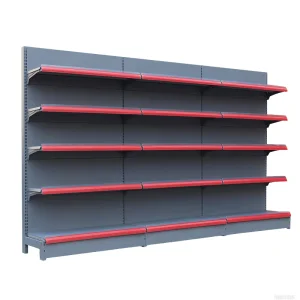
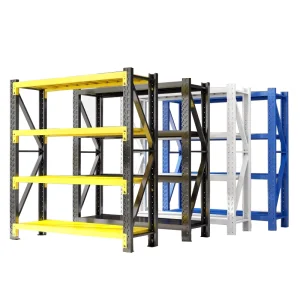
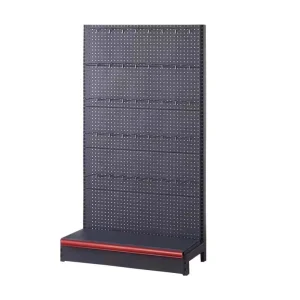
Strategic B2B Partnership Profiles, Engineering Capacity, and Global Reach Metrics
Established in 2013, Guangzhou Fangjiu Shelf Co., Ltd. is a leading manufacturer specializing in heavy-duty warehouse racking systems, industrial shelving, and customized storage solutions. Spanning a modern facility of over 35,000 square meters, we integrate raw material processing, automated production, strict quality inspection, and global distribution under one roof.
With 10 years of deep industry expertise and 7 years of export experience, our brand has grown into a trusted storage solution supplier worldwide. Our products are exported to primary markets across North America, Europe, Southeast Asia, and the Middle East, generating an annual export revenue reaching $49 million USD. We maintain robust strategic alliances with over 580 reliable supply chain partners to ensure seamless sourcing, consistent material quality, and competitive lead times.
Quality and safety are at the core of our operations. Our dedicated quality assurance division comprises 38 professional QC inspectors who enforce stringent quality control protocols at every manufacturing stage. Utilizing advanced testing methods—including Ultrasonic Flaw Detection for critical welds, Salt Spray Corrosion Testing, Automated Powder Coating Thickness Measurement, and Full Load Stress & Deflection Testing—we ensure every rack system meets ISO 9001 and international safety standards.
We cater to a diverse clientele, primarily serving B2B enterprise buyers, third-party logistics (3PL) providers, industrial warehouse developers, and global racking importers. Backed by a professional team of 25 R&D engineers, we possess robust research and development capabilities, successfully launching over 150 new innovative products and structural designs in the past year alone. Our comprehensive OEM & ODM customization options allow clients to tailor beam capacities, upright profiles, decking types, color schemes, and specialized anti-seismic rack structures to meet precise warehouse layout requirements.
Analyzing the shift toward heavy-duty, customizable, and automated logistics architectures.
Industrial storage has evolved from static wood racking to advanced structural steel cantilever systems. The global transition to long-form steel structural elements, continuous profiles, and heavy pipe processing requires storage units that are structurally unconstrained by front columns. Modern warehouses are migrating toward high-density configurations to mitigate rising real estate costs.
The incorporation of Automated Storage and Retrieval Systems (AS/RS) with customized heavy-duty cantilevers is redefining processing times. High-strength roll-formed steel, combined with modern structural profiles, permits load capacities exceeding several tons per arm, changing the workflow dynamics in steel mills, timber distribution hubs, and automotive manufacturing plants.
Global purchasing procurement officers look beyond basic steel rack configurations. Sourcing entities require structural calculations validating compliance with regional architectural and safety codes, such as the RMI (Rack Manufacturers Institute) standards in North America or EN 15512 specifications in Europe. Material traceability, loading limits under dynamic deflection conditions, and corrosion ratings (C3 to C5 industrial standard levels) are mandatory indicators.
Furthermore, procurement processes emphasize supply chain visibility, flexible OEM and ODM custom sizing options, and verified loading configurations that eliminate material deformation under heavy, unevenly distributed loads.
Seismic resilience is a key design criterion for racking systems, particularly in seismic zones like the U.S. West Coast, parts of Central and South America, and Japan. Racking systems deployed in these zones require custom engineering to absorb lateral ground acceleration without catastrophic structural collapse.
Fangjiu address these challenges by customizing upright profiles with larger baseplates, dynamic structural cross-bracing systems, and custom arm connections. Finite Element Analysis (FEA) is utilized during the R&D phase to simulate earth movement patterns and verify structural stability.
Strategic automation, domestic raw material proximity, and manufacturing integration at Guangzhou Fangjiu.
China's manufacturing infrastructure is shifting from simple labor-intensive assembly to smart, automated factories. The implementation of automated high-precision roll-forming machines, robotic welding arrays, and computerized electrostatic powder coating systems ensures high product consistency. At Guangzhou Fangjiu Shelf Co., Ltd., we leverage these advancements to guarantee structural integrity across every structural column and arm extension produced.
Our factory utilizes high-grade Q235B and Q345B steel grades, sourced directly from premier domestic mills. This raw material consistency is essential to ensuring load capacities and safety coefficients. By keeping the entire workflow—from design and mechanical profiling to welding, testing, and surface treatments—within a single controlled facility, we reduce manufacturing waste and optimize processing throughput times.
This concentration of operations, supported by strategic partnerships with over 580 logistics and steel mills, allows us to remain resilient against global market shifts, shipping fluctuations, and material shortages. We provide our enterprise clients with stable pricing, scalable production volumes, and predictable delivery timelines.
| Structural Element | Material Specifications | Manufacturing Capabilities |
|---|---|---|
| Upright Columns | Q235B / Q345B High-Tensile Steel | Cold Roll-Formed C/U Profile (up to 6000mm length) |
| Cantilever Arms | Tapered H-Beams or Box Sections | Automated robotic gas-shielded arc welding (Mig/Mag) |
| Base Plates | Thickened Structural Plates | Laser-cut mounting holes for anchor bolts |
| Finishing Coats | Electrostatic Epoxy Powder Coat | Coated at 200°C, average thickness > 80 microns |
A detailed view of our automated manufacturing line, from raw material preparation to final warehouse storage.
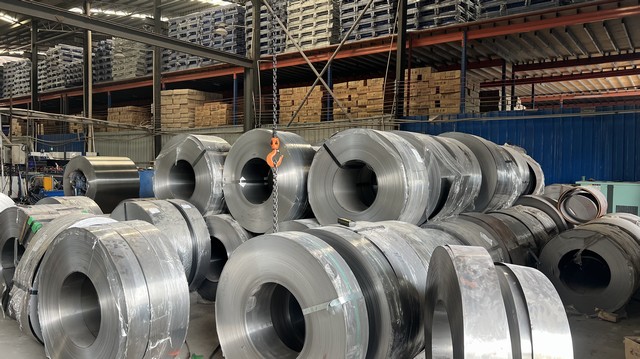
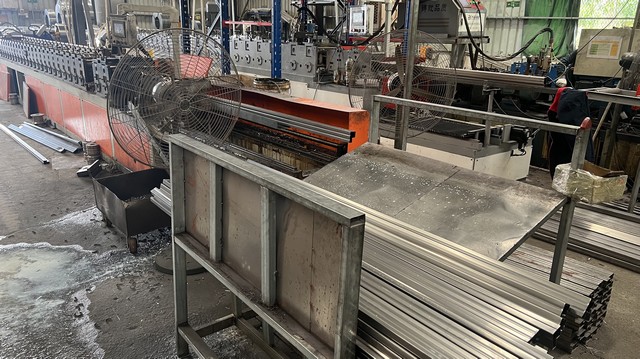
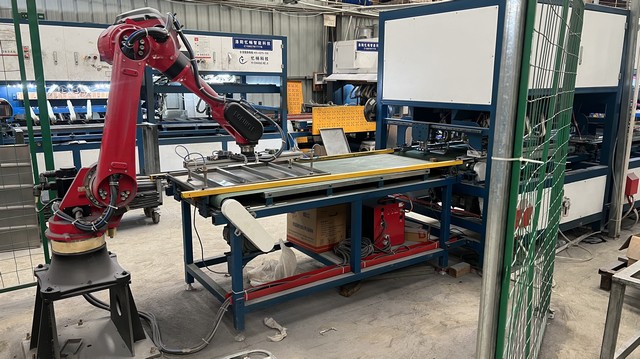
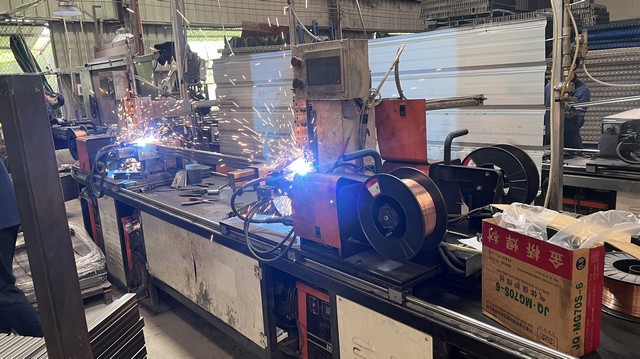
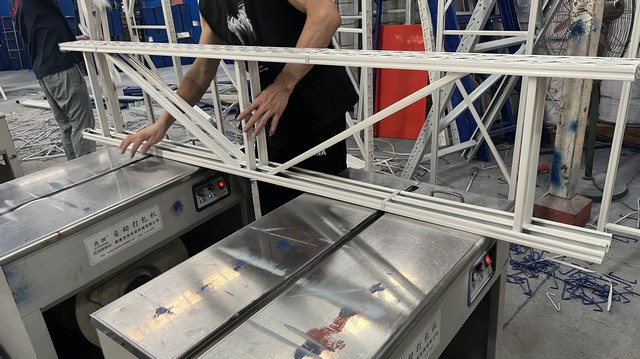
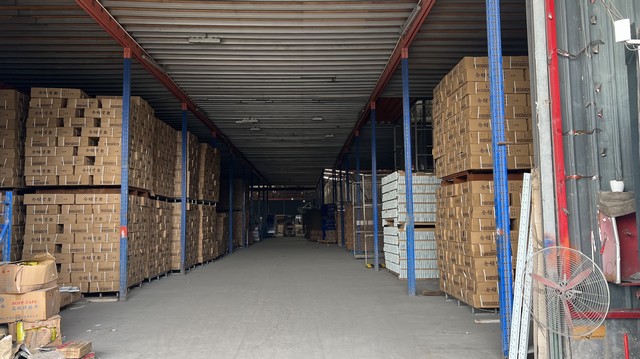
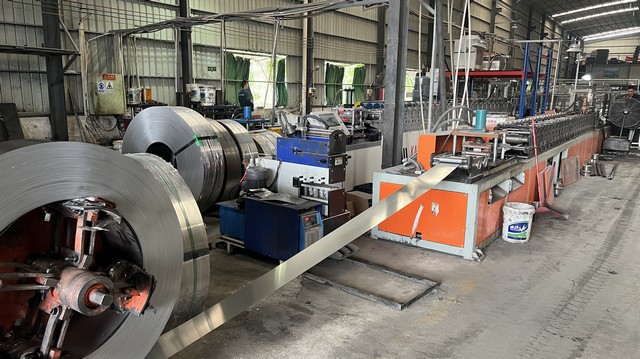
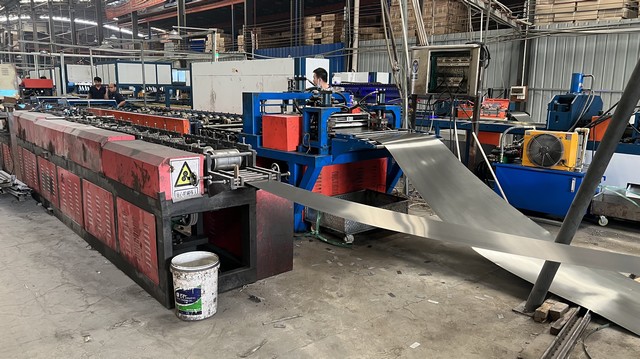
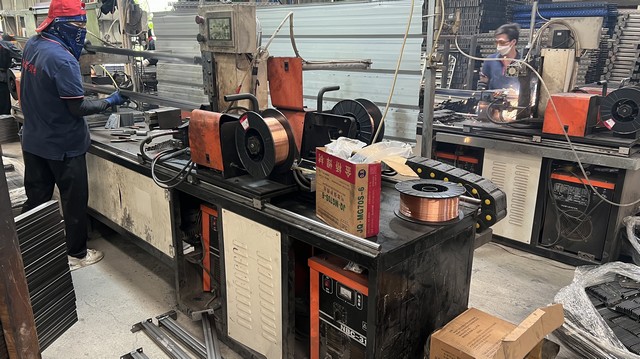
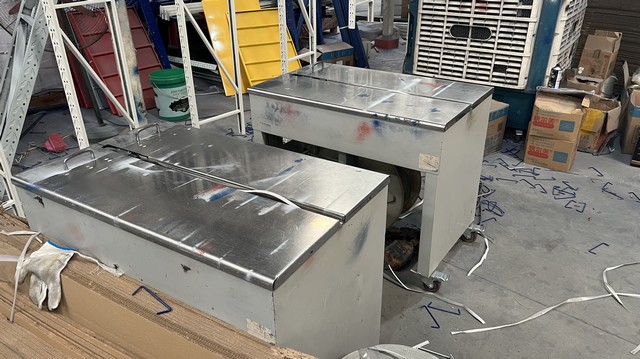
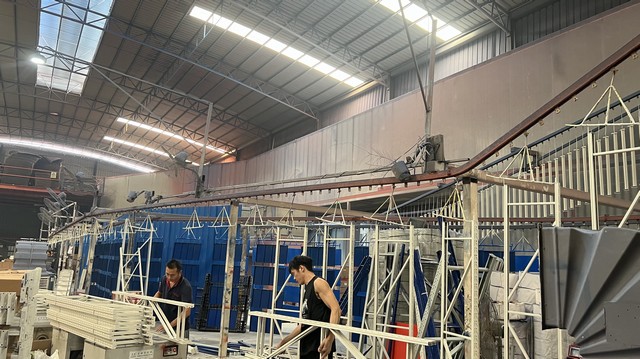
Analyzing how cantilever and heavy-duty storage configurations adapt to real-world industrial environments.
In metal fabrication and steel storage facilities, storing raw materials like structural steel beams, iron pipes, round bars, and heavy metal coils presents distinct handling challenges. Standard pallet racks are prone to buckling under these concentrated, long-span weights.
Heavy-duty cantilever racks resolve this by using continuous storage space without front vertical columns. Uprights with structural bracing withstand dynamic forces during forklift loading and unloading. Tapered arms prevent the flexing and slipping of cylindrical tubes, and removable end-stops prevent materials from rolling off the rack.
Timber yards and wood product manufacturers deal with varying sizes and lengths of plywood sheets, MDF panels, and long structural joists. Standard shelving cannot handle these dimensions, often resulting in sagged materials or inefficient floor storage.
Adjustable arm-cantilever arrays allow staff to modify shelf heights to fit changing stock sizes. The smooth, continuous support along the structural arms distributes the load evenly. This helps prevent sag in thin composite boards, protecting material quality while optimizing the use of vertical warehouse space.
Automotive, aerospace, and agricultural equipment assembly lines rely on prompt material access to stay on schedule. Sub-assemblies, vehicle frames, structural steel panels, and long composite tubes must be stored close to the production line.
Using single-sided cantilever racks positioned along assembly aisles keeps these oversized components visible and accessible to crane systems and reach trucks. This setup minimizes travel times, limits material handling, and supports lean manufacturing workflows.
Technical calculations, safety factors, material science, and engineering parameters explained by experts.
All heavy-duty cantilever racking designed by Guangzhou Fangjiu adheres to international standards, applying a safety factor of 1.5 to 1.8 depending on the structural grade (Q235B or Q345B) and loading parameters. We design systems to comply with the L/300 deflection limit (where L represents the unsupported arm length). This means for a 1200mm cantilever arm, the maximum allowable deflection under full static load does not exceed 4mm. We verify these tolerances using Finite Element Analysis (FEA) to prevent structural fatigue over long operational cycles.
The choice of material grade directly affects the yield strength and ultimate load-bearing capacity of the rack system. Q235B steel is the industry standard for light to medium-heavy racking, offering a yield strength of 235 MPa. It provides a cost-effective balance of strength, weldability, and ductibility. For high-capacity setups, we utilize Q345B steel, which has a higher yield strength of 345 MPa. This allows us to manufacture thinner, lighter, and more rigid profiles that handle heavier loads per arm without adding excessive dead weight to the warehouse floor.
Overturning moment is a key risk factor for single-sided cantilever configurations. To address this, we engineer the rack base length to be equal to or longer than the load arm length, which shifts the center of gravity back toward the vertical column. Additionally, the upright columns are securely anchored to the concrete floor using high-tensile expansion or chemical anchor bolts. We calculate concrete floor thickness and density requirements during the project planning phase to ensure the floor can withstand the localized shear forces.
For dry, indoor warehouse environments, our automated electrostatic epoxy powder coating (with a thickness of 80 to 100 microns) offers excellent scratch resistance, impact durability, and aesthetic finish. For outdoor installations, high-humidity rooms, or chemical storage facilities, we recommend hot-dip galvanizing (HDG) to BS EN ISO 1461 standards. HDG leaves a zinc-alloy protective layer (exceeding 85 microns in thickness) that prevents corrosion and rust, even if the steel surface gets scratched during loading.
Yes, our systems are built for flexibility. The upright columns feature pre-punched connector slots (typically spaced at 75mm or 100mm increments) along their entire height. This allows warehouse staff to adjust arm positions up or down to match changing cargo dimensions without welding or special tools. Keylock pins secure the arm in place, preventing accidental dislodgement from forklift impacts while allowing for straightforward adjustments when needed.
Versatile retail fixtures and heavy duty modular racking engineered for commercial showrooms and distribution outlets.
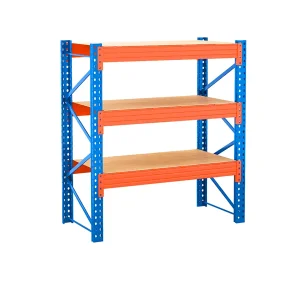
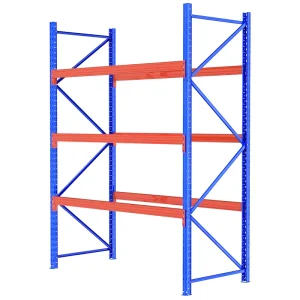
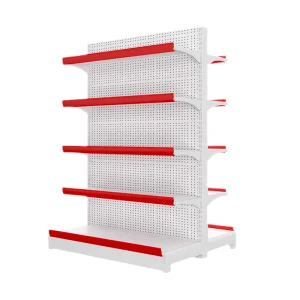
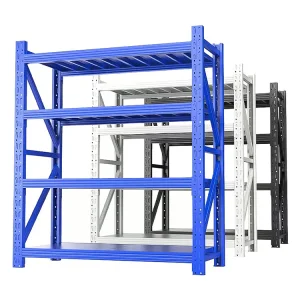
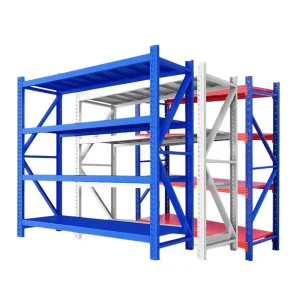
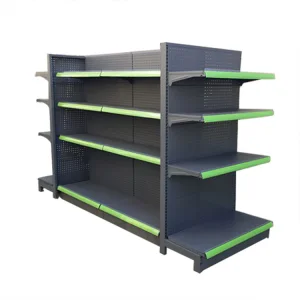
 Fangjiu Rack