Fangjiu Rack
Nagoya's Industrial & Logistical Hub Realities
The Greater Nagoya Area, encompassing Aichi, Gifu, and Mie prefectures, is the undisputed industrial locomotive of Japan. Producing over 40% of the country’s manufacturing output, Nagoya acts as the foundational base for global automotive leaders, aviation components, machine tool assembly plants, and robotics systems. This density translates to localized, extremely fast-paced logistics. Modern facilities in locations like the Nagoya Port Area, Komaki, Kasugai, and Toyohashi demand optimized storage configurations that align with Just-in-Time (JIT) manufacturing and kanban dispatch systems.
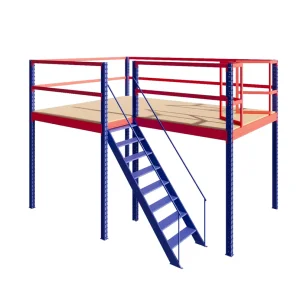
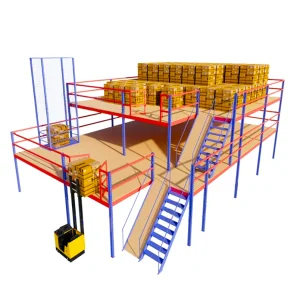
Faced with high real estate costs in industrial parks, companies cannot afford horizontal sprawl. Warehouses must build upwards. Because Nagoya sits in a region subject to seismological monitoring under the Tokai Earthquake zone guidelines, any racking system erected must conform strictly to Japanese Building Standard Law (Kenchiku Kijun-hō) guidelines. This requires calculation of design seismic loads, using chemical anchor systems, customized cross-bracing, and load calculations that withstand lateral acceleration forces ($K_h \ge 0.25$).