Top Impact Racks Manufacturers in China for Global Buyers

Time:2026-11-05 Author:Liam
0%

Choosing an Impact Racks manufacturer is not just a price comparison. It is a decision about load stability, forklift clearance, installation quality, and long-term service. A pallet may weigh several hundred kilograms; a bent upright can change how safely a whole bay performs. Buyers should compare steel specifications, rated capacities, connection details, coatings, and inspection support—not rely on product photos alone.

Quality expert W. Edwards Deming warned, “A bad system will beat a good person every time.” His observation is relevant here: even skilled operators cannot compensate for poorly specified or damaged rack systems. Deming was not an Impact Racks specialist, so this quotation is a systems-design principle, not product advice. For technical decisions, buyers should request engineering documentation and confirm that the proposed design suits their loads, equipment, and site conditions.

This guide examines manufacturers in China serving global buyers, with attention to production capability, customization, quality controls, export experience, and communication. Look for clear drawings, traceable material information, and realistic delivery commitments. Ask who handles installation guidance and replacement parts. Small details matter. A quote that omits anchors or protective guards may appear cheaper, then create costly gaps later. No single supplier fits every warehouse; this comparison aims to make those trade-offs easier to assess.
Top Impact Racks Manufacturers in China for Global Buyers

Impact Racks Explained: Upright Guards, Frame Protectors, and Rack Safety

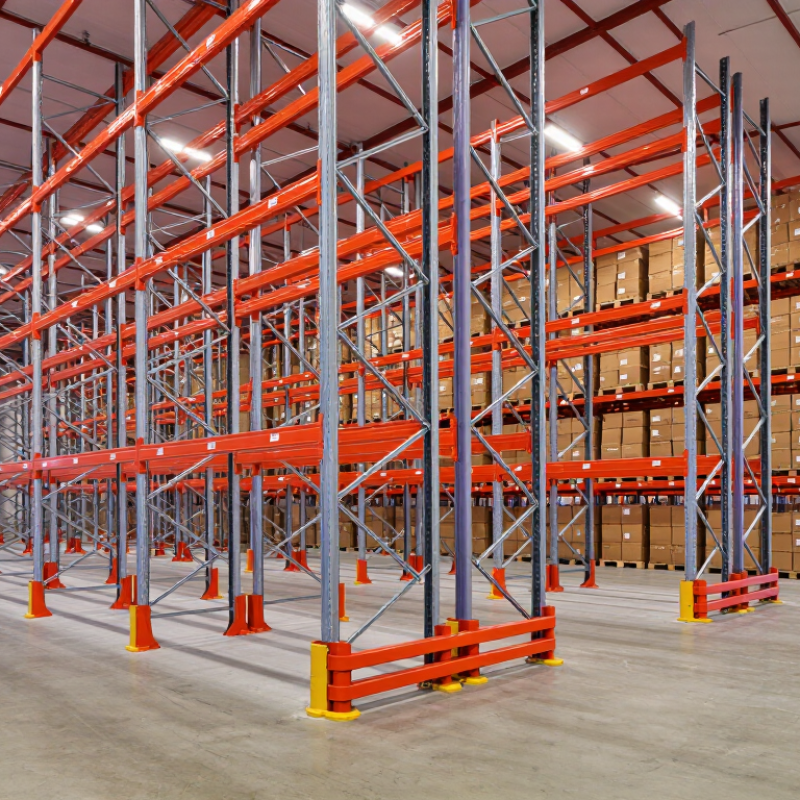
Impact protection starts at the aisle edge. Upright guards shield the columns most exposed to forklift contact, while frame protectors help defend lower beams and bracing. Choose guards that fit the rack system and leave space for inspection. A bent upright can hide damage behind a seemingly minor scrape.

OSHA’s powered industrial truck guidance cites estimates of 85 forklift-related fatalities and 34,900 serious injuries annually in the United States. These figures cover forklift incidents broadly, not rack collisions alone. Still, they show why clear aisles, trained operators, and visible rack protection matter. Guards reduce exposure; they do not make a damaged frame safe. Replace or assess compromised components before loading them again.

Tips: Anchor guards securely, mark aisle-side hazards, and inspect uprights after any impact. Photograph dents and loosened anchors. A small defect can be easy to miss, especially under stored pallets. Protection also needs maintenance; that part is sometimes overlooked.

Impact Racks Explained: Forklift Impact Energy and Rack Safety

The bars show calculated kinetic energy for a 3,000 kg forklift at different speeds, using E = ½mv². These illustrative values are not rack impact ratings: actual impact depends on the vehicle, load, impact angle, and other conditions. Upright guards and frame protectors can help shield vulnerable rack components, but they do not replace a site-specific safety assessment or manufacturer guidance.

China’s Leading Impact Rack Manufacturers: Products, Capacity, and Export Markets

China’s impact-rack manufacturers serve warehouses that need dense storage and reliable forklift access. Common products include selective pallet racks, drive-in systems, and reinforced frames with replaceable protectors. Buyers should compare steel thickness, beam connectors, weld quality, and published load ratings—not just quoted price. Capacity varies.

Factory capacity is difficult to compare because suppliers may report annual tonnage, production lines, or nominal output. Ask for the basis behind each figure, recent inspection records, and samples of finished welds and coatings. A high output claim is less useful if peak-season lead times are unclear. That gap matters.

Demand reflects China’s wider logistics activity, though logistics data is not rack-specific. The China Federation of Logistics and Purchasing reported total social logistics value of 352.4 trillion yuan in 2023, up 5.2% year on year. For global buyers, supplier checks should also cover export packing, drawings in metric and imperial units, spare-part availability, and communication across time zones. Export markets differ in pallet dimensions, warehouse layouts, and installation practices. Request a project-specific layout and written load assumptions before comparing offers. A polished catalogue cannot replace these checks.

Load Design Benchmarks: EN 15512:2020 and ANSI MH16.1-2023

For global buyers, EN 15512:2020 and ANSI MH16.1-2023 are useful benchmarks for comparing pallet-rack designs. EN 15512:2020 covers structural design of adjustable pallet racking; ANSI MH16.1-2023 sets design, testing, and utilization requirements for industrial steel storage racks. Both direct attention to actual configuration, not just a headline capacity. A quoted beam rating cannot describe the whole rack.

Ask manufacturers for the design assumptions behind each load figure: pallet mass, beam span, upright height, bay layout, floor conditions, and expected handling impacts. These details matter. The standards do not create one universal safe load for every rack. A 1,000 kg pallet, for example, is only a useful design input when its placement and load distribution are also defined. Request calculations and drawings that identify the applicable standard and revision. Compare those documents, not just catalog numbers. One awkward detail: site changes can invalidate original assumptions.

Tips: Check that load plaques match the installed layout. Keep a record of pallet weights and report bent or damaged components for competent inspection. Cite the standards directly: CEN EN 15512:2020 and RMI ANSI MH16.1-2023.

Damage Inspection Standards: EN 15635:2008 and FEM 10.2.02

For global buyers, rack damage checks should be part of daily warehouse practice, not a paperwork exercise. EN 15635:2008 sets guidance for using and maintaining steel storage equipment. It calls for regular visual checks by staff and periodic expert inspections, generally at intervals no longer than twelve months. Small dents matter. A bent upright near floor level, a loose beam connector, or a cracked weld can change how a frame carries load.

Inspectors should record the location and severity of each defect, using clear photographs and rack identifiers. EN 15635 describes damage categories that help determine whether equipment can remain in service, needs prompt repair, or must be unloaded and isolated. Site rules should define who can make that decision. A quick visual check is useful, but it cannot replace a competent technical assessment.

Buyers should also confirm what FEM 10.2.02 covers in the supplier’s documentation. Its scope and edition should be checked rather than assumed to match an operational damage-inspection procedure. Ask manufacturers for inspection guidance, repair criteria, load notices, and training records. Records make patterns visible. Even a careful checklist has limits: forklift impacts may leave damage behind a load or at a hidden connection, so inspections need good access and enough time.

Global Buyer Checklist: Certifications, Load Ratings, Testing, and Spare Parts

When comparing impact rack manufacturers in China, check certification documents against the exact product and intended market. Confirm the certificate is current, identifies the issuing body, and covers the rack configuration you plan to buy. Ask for load-rating tables showing beam levels, bay widths, and upright details. A single headline capacity is not enough. The installed layout may differ from the tested setup.

Request test reports for impact performance and structural capacity, including the specimen configuration and test conditions. Compare those details with your site’s floor, anchoring method, handling equipment, and expected loads. Ask how ratings change when beam spacing or rack height changes. Paperwork can look complete, yet leave practical questions unanswered. That deserves a closer review. Also confirm whether spare uprights, beams, and connectors will remain available, with clear part references and realistic lead times.

Tips: Keep certificates, test reports, approved drawings, and load labels together. Check sample parts against drawings before bulk shipment. Ask who handles replacement-part questions after delivery. Small mismatches matter.

FAQS

What do upright guards protect?

They shield rack columns near aisle edges, where forklift contact is more likely. Secure them firmly and leave room to inspect the uprights.

How are frame protectors different from upright guards?

Frame protectors help defend lower beams and bracing. They do not make a damaged frame safe.

What should I do after a rack impact?

Inspect the upright, nearby bracing, and anchors. Photograph dents or loosened anchors, and have compromised parts assessed before reloading.

Do rack standards provide one safe load limit for every setup?

No. EN 15512:2020 and ANSI MH16.1-2023 address rack design and use, but actual capacity depends on the installed configuration.

What details should support a quoted load rating?

Ask for assumptions covering pallet weight, beam span, upright height, bay layout, and floor conditions. Request calculations and drawings, not just a headline number.

Why can a site change affect the original rack rating?

Changing beam spacing, rack height, or pallet placement can alter the design assumptions. A small layout change may matter more than expected.

What should I check in certificates and test reports?

Confirm documents match the exact product and intended configuration. Review test conditions, specimen details, and the issuing body.

Which records and spare parts should I plan for?

Keep approved drawings, certificates, test reports, and load labels together. Confirm replacement uprights, beams, and connectors have clear part references and realistic lead times. Paperwork can still leave gaps.

Conclusion

Impact Racks help protect warehouse storage systems from damage caused by forklifts and other moving equipment. Upright guards, frame protectors, and related safety measures can reduce the risk of impacts affecting rack components, while regular inspections help identify damage before it compromises safe operation. Selecting suitable protection starts with understanding the rack layout, equipment traffic, load conditions, and areas most exposed to collision.

For global buyers, comparing manufacturers means looking beyond product range and production capacity to assess export experience, documentation, testing, and access to spare parts. Load designs should be evaluated against relevant benchmarks, including EN 15512:2020 and ANSI MH16.1-2023, while inspection programs can draw on EN 15635:2008 and FEM 10.2.02. Buyers should confirm certifications, rated capacities, test records, and replacement-part availability, then ensure products fit their site conditions and operating requirements.

Liam

Liam

Liam is a dedicated marketing professional with a profound expertise in the industry, where he excels at highlighting the unique advantages of our core products. With a keen understanding of market trends and consumer needs, Liam frequently updates our company’s professional blog, providing......