How to Choose the Best Drive in Storage Solution?

Time:2026-09-26 Author:Mason
0%

Choosing the best Drive-in Storage solution begins with understanding your inventory, not admiring a rack catalogue.

Dr. James A. Tompkins, a respected warehousing and logistics expert, wrote, “The warehouse is not a storage facility; it is a flow-through facility.” This principle matters when selecting high-density storage. Drive-in Storage can reduce aisle space and increase pallet capacity, especially for uniform products moved in large batches. However, density alone does not guarantee efficiency.

A suitable system must match pallet dimensions, load weights, forklift reach, product turnover, and building height. Picture a cold warehouse holding identical frozen-food pallets. A deep-lane system may preserve valuable floor space while limiting unnecessary travel. Yet, it may create problems when operators need frequent access to different stock-keeping units.

That trade-off deserves attention.

An experienced supplier should inspect column spacing, slab condition, rack protection, entry clearances, and operating temperatures. Ask for load calculations, installation records, inspection procedures, and maintenance guidance. Reliable providers should explain both advantages and limitations. They should not promise maximum capacity without discussing selectivity, loading discipline, and forklift training.

I would also question one common assumption: higher density always means lower costs. It can fail when inventory changes quickly or pallets vary widely. In those conditions, a selective or shuttle-based system may support better access and fewer handling delays.

The strongest choice combines measured capacity with safe daily operation. This article will examine layout, pallet compatibility, durability, access requirements, and lifecycle value. Some recommendations may appear conservative. That is intentional. In storage design, a small oversight can become a recurring operational expense.
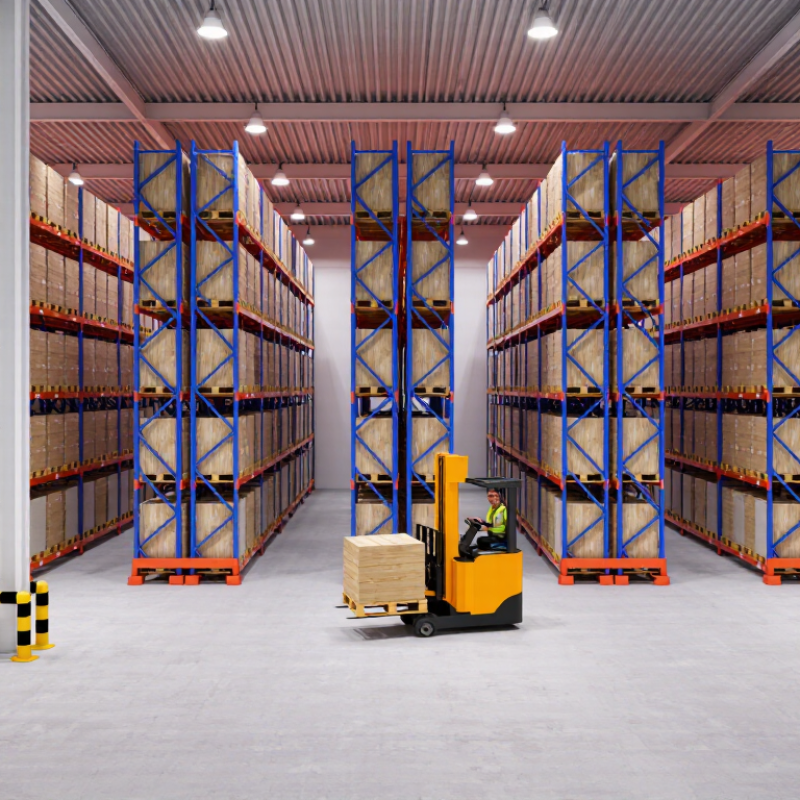
How to Choose the Best Drive in Storage Solution?

Define Drive-In Storage and Its Main Use Cases

Drive-in storage is a high-density pallet-racking system. A forklift enters the rack lane and places pallets on supporting rails, rather than accessing every pallet from an aisle. This reduces aisle space, but usually limits direct access to individual loads. Many layouts operate last-in, first-out, so the newest pallet is retrieved first.

Dense storage. Fewer aisles.

This setup suits operations holding many pallets of the same product, especially when turnover is predictable. Common applications include chilled and frozen food, beverage stock, and seasonal goods. In these settings, fewer aisles can make better use of costly floor space. Grand View Research estimated the global cold-chain market at USD 316.4 billion in 2023 and forecast 18.6% annual growth from 2024 to 2030. That market figure is not proof that drive-in racks fit every facility; SKU variety, pallet condition, and retrieval frequency still matter. A narrow lane can become a bottleneck when one slow-moving pallet blocks access to others.

Tips: Before choosing a layout, map each SKU’s pallet count and daily moves. Check forklift turning clearance and pallet consistency with an on-site trial. Keep fast-moving or mixed products in more accessible storage. One overlooked detail: damaged pallets may not slide safely on the rails. A few blocked positions can erase the space savings.

Assess Your Storage Needs, Vehicle Access, and Space Requirements

How to Choose the Best Drive-in Storage Solution?
Assess Your Storage Needs, Vehicle Access, and Space Requirements

A drive-in storage unit should fit both your belongings and the vehicle carrying them. Start with a practical inventory: count boxes, note bulky items, and measure furniture before choosing a unit. Measure twice. Include the vehicle’s height, width, and turning space in your calculations. A tall van may clear the entrance but still leave too little room to unload safely. Check the unit door and aisle dimensions with the facility, not just the advertised floor area.

The Self Storage Association’s 2023 Self-Storage Demand Study estimated that 11.1% of U.S. households currently rent self-storage. That figure signals meaningful demand, but it cannot tell you how much space your own load needs. Match the unit size to your actual items, then allow room to walk around them. Tight turns matter. If you need frequent access, keep commonly used boxes near the entrance and leave a clear path from the vehicle. For seasonal storage, a denser layout may work, though retrieving one item can become inconvenient.

A simple sketch of the vehicle, doorway, and planned storage layout can expose problems early. Leave clearance for mirrors, doors, and safe unloading. Estimates can still be imperfect, especially when furniture shapes are awkward; confirm measurements before booking.

How to Choose the Best Drive in Storage Solution? - Assess Your Storage Needs, Vehicle Access, and Space Requirements

Compare common storage options by the items you plan to store, access needs, and approximate space.
Storage Need Typical Space to Consider Vehicle Access Suitable For Key Points to Check
A few boxes or small seasonal items About 5 × 5 ft (25 sq ft) Usually indoor access; vehicles generally cannot enter the unit Cartons, small décor, and a few compact household items Check hallway and elevator access, unit height, and whether you need shelving.
Contents of a small room About 5 × 10 ft (50 sq ft) Indoor access or drive-up access, depending on the facility Boxes, a mattress, chairs, or the contents of a small room Confirm the loading route and measure large furniture before choosing a unit.
Contents of a one-bedroom home About 10 × 10 ft (100 sq ft) Often accessed from a corridor; drive-up units may be available Furniture, appliances, and cartons from a modest apartment Allow room for an aisle if you need to reach items at the back.
Frequent loading or bulky household goods About 10 × 15 ft (150 sq ft) Drive-up access can reduce carrying distance when offered Several rooms of furniture, equipment, or business supplies Check the unit door width, vehicle route, parking rules, and access hours.
Vehicle or large load needing direct access About 10 × 20 ft (200 sq ft), subject to vehicle dimensions Drive-up units may allow a vehicle to approach the unit; entry depends on door and unit dimensions Some cars, motorcycles, tools, or larger household loads Measure the vehicle including mirrors, and verify door height, door width, turning space, and permitted uses.
Long-term vehicle parking Outdoor or covered parking spaces vary by facility Direct vehicle access to a marked parking space Cars, trailers, or other permitted vehicles Confirm space dimensions, surface type, cover, security, access schedule, and vehicle restrictions.

Planning tip: Unit dimensions are common examples, not guaranteed standards. Measure your largest items and vehicle, consider how often you will need access, and confirm actual dimensions, access arrangements, and storage rules with the facility before booking.

Compare Facility Design, Security Features, and Weather Protection

How to Choose the Best Drive in Storage Solution?
Compare Facility Design, Security Features, and Weather Protection

The best drive-in storage option is not always the newest facility. Compare the layout in person, if possible. Wide lanes and clear turning space make loading less stressful, especially with a trailer or bulky furniture. Check whether doors open fully and whether the path from your vehicle to the unit stays level and unobstructed. A covered loading area can help during a sudden shower, but it may not protect every unit. Details matter.

Security should be visible and practical. Look for controlled entry, working cameras, bright lighting, and staff who can explain how access is monitored. Ask how missing keys or access codes are handled. Weather protection deserves equal attention. Inspect roofs, gutters, drainage, and door seals; water can collect near ground-level units after heavy rain. For temperature-sensitive belongings, ask about actual climate ranges and backup plans, rather than relying on a “climate-controlled” label alone. A clean lobby is reassuring, but it does not answer every question.

Tips: Visit after rain if possible, and look for damp smells, puddles, or rust around hinges. Photograph the unit and note your concerns before signing; a quick inspection can miss small flaws.

How to Choose the Best Drive-in Storage Solution?

Compare facility design, security features, and weather protection to find the storage type that best fits your needs.

How to read this chart: Scores are illustrative feature-fit ratings from 1 (lower) to 5 (higher), not industry-standard measurements. Actual security and weather protection depend on each facility’s design, equipment, and policies.

Evaluate Pricing, Location, Accessibility, and Contract Terms

How to Choose the Best Drive in Storage Solution?

Compare the full monthly cost, not just the advertised rate. Ask about administration fees, deposits, insurance requirements, and charges for late payment or ending the agreement early. A low introductory price may rise after a few months. Put the expected total beside your household budget. Small fees add up. Also consider whether you are paying for space you will actually use; measure bulky furniture before choosing a unit size.

Location and access affect everyday convenience. A nearby facility can save time, but check traffic at the hours you plan to visit. Walk the route from the parking area to the unit, and notice stairs, lifts, lighting, and how wide the corridors are. Visit before paying. Confirm the access hours and whether entry procedures could slow down a quick trip. A facility that closes early may be inconvenient if your schedule changes.

Read the contract carefully, especially its renewal dates, notice period, payment rules, and responsibility for protecting stored belongings. Ask what happens if you need a different unit or want to leave sooner. Get important answers in writing. It is easy to focus on price during a quick tour and overlook restrictive terms. If anything feels unclear, pause and ask for a plain explanation before signing.

Select the Storage Solution That Best Fits Your Priorities

How to Choose the Best Drive in Storage Solution?

Select the Storage Solution That Best Fits Your Priorities

A drive-in storage unit can save time when you move bulky items or make frequent visits. But easy access is only useful if the unit suits what you store. List your priorities: low monthly cost, convenient loading, extra security, or protection from heat and dampness. Then compare facilities against that list. Check opening hours, vehicle access, lighting, and whether the route to your unit can fit your car or van. Measure large items before choosing a unit. Measure twice. A slightly larger space may make loading safer, but unused space can quietly raise costs.

It is easy to focus on price and overlook how often you will visit. If you need tools every week, distance and access hours may matter more than a small discount. For furniture stored over several months, ask how the facility manages moisture and temperature changes. Do not assume every unit offers the same conditions. One imperfect choice can become inconvenient; priorities may also change after moving day. Choose a flexible arrangement when your storage needs are uncertain, and confirm the terms before signing.

FAQS

How should I compare storage prices?

Compare the full monthly cost, not only the advertised rate. Ask about deposits, administration fees, insurance requirements, and early-exit charges. Small fees add up.

How can I choose the right unit size?

Make a quick inventory and measure your largest furniture. Compare its dimensions with the unit. Measure twice. Extra space can make loading easier, but unused space may increase your cost.

What should I check during a facility visit?

Walk from the parking area to the unit. Notice stairs, lifts, lighting, corridor width, and the condition of the door and floor. A quick visit can still miss things.

Why does location matter for drive-in storage?

A nearby facility may save time, especially if you visit weekly. Check traffic at your usual visiting hours, and see whether your car or van can reach the unit.

Which access details should I confirm?

Ask about opening hours, vehicle access, and entry procedures. A facility that closes early may not suit a changing schedule. Check the route before paying.

What contract terms deserve attention?

Review renewal dates, notice periods, payment rules, and responsibility for protecting your belongings. Ask what happens if you need another unit or want to leave early. Get key answers in writing.

How should I choose between low cost and easy access?

List your priorities, such as monthly cost, loading convenience, security, or protection from dampness. If you need tools every week, distance may matter more than a small discount.

How can I protect stored furniture from changing conditions?

Ask how the facility manages moisture and temperature changes. Conditions can vary between units. I might overlook a detail during a tour, so ask again before signing.

Conclusion

Choosing the best Drive-in Storage solution starts with understanding how this type of facility works and what you plan to store. Drive-in storage typically allows vehicles to enter a covered or enclosed area for convenient loading and unloading. Consider the size and quantity of your belongings, the type of vehicle you need to access the space, and how much room you require for both storage and maneuvering.

Next, compare facility layouts, security measures, and protection from weather. Review the total cost, location, access hours, and contract terms, including any fees or restrictions. A convenient location may save time, while suitable access arrangements can make frequent visits easier. Weigh these factors against your budget and priorities, then select the option that offers the right balance of space, convenience, protection, and value for your needs.

Mason

Mason

Mason is a seasoned marketing professional with a deep expertise in the company's offerings and a passion for driving brand awareness. With a strong background in digital marketing strategies, he has an innate ability to connect with diverse audiences and effectively communicate product benefits.......