Global trade depends on containers that survive cranes, salt air, rough roads, and repeated handling. Steel Containers remain a practical choice because they offer structural strength, repairability, and standardized dimensions. Yet “best” depends on cargo type, route, climate, budget, and service life.
UNCTAD’s Review of Maritime Transport 2024 reported approximately 12.3 billion tonnes of seaborne trade in 2023. That volume highlights the pressure placed on freight equipment worldwide. The World Steel Association reported global crude steel production of about 1.88 billion tonnes in 2023. Steel remains deeply embedded in modern logistics and infrastructure. However, production volume does not prove container quality.
This guide examines ten Steel Containers for global buyers. It considers ISO compliance, corner casting strength, floor construction, corrosion protection, payload, ventilation, and maintenance access. ISO 668 and ISO 1496 provide important reference points for container dimensions and performance requirements. Buyers should still verify certificates, manufacturer records, inspection plates, and actual repair history.
Details matter.
A container exposed to coastal humidity may need stronger coating protection than one used inland. A wooden floor can perform well, but moisture damage may remain hidden beneath cargo. Doors should close evenly, while gaskets should resist dust and rain. These practical checks often reveal more than polished product photographs.
The ranking is useful, not absolute. Some choices may be debatable. Local availability, port acceptance, and replacement parts can change the decision. Buyers should compare total ownership cost, not only the initial quotation. Fresh inspection by a qualified professional is still essential before purchase.
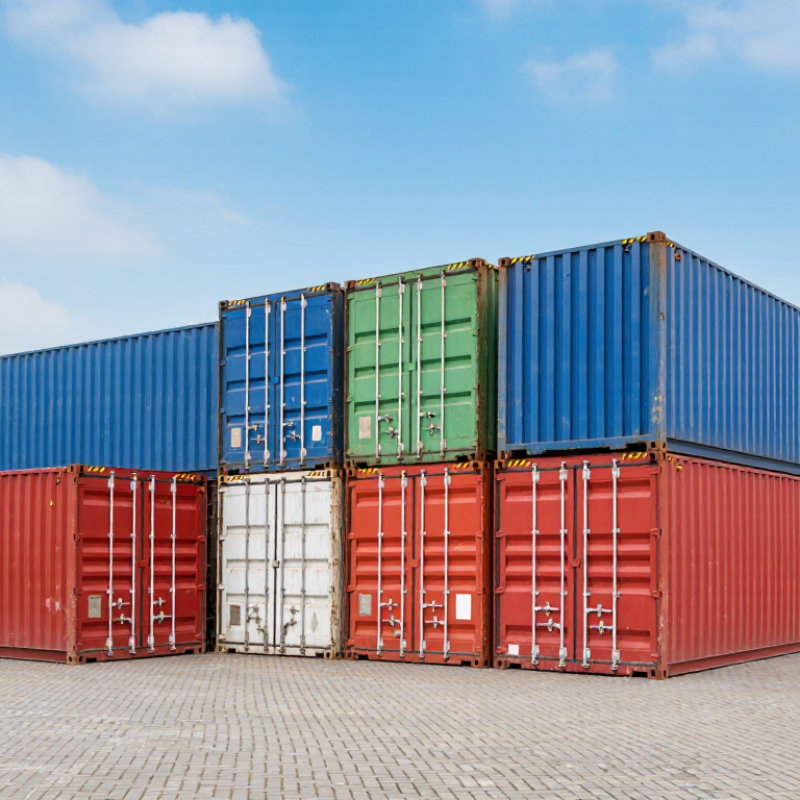
10 Best Steel Containers for Global Buyers?
Steel containers work best when dimensions, cargo behavior, and handling equipment match. ISO 668 defines common external footprints. A 20-foot unit measures 6.058 by 2.438 by 2.591 meters. A standard 40-foot unit measures 12.192 by 2.438 by 2.591 meters. High-cube models add height, reaching 2.896 meters. These limits support cranes, chassis, rail wagons, and port stacking worldwide. UNCTAD’s Review of Maritime Transport 2024 recorded about 858 million TEUs in global container-port throughput during 2023. Compatibility remains essential.
For general cargo, standard dry and high-cube containers are practical choices. Side-door units improve access for pallets and machinery. Ventilated containers suit coffee, produce, and moisture-sensitive cargo. Open-top and hard-top versions handle tall equipment, timber, and scrap metal. Flat racks support oversized industrial loads, but lashing plans require careful review. Platform containers serve very wide or heavy cargo. Tank containers carry regulated liquids within specialized steel tanks. Reefer containers protect temperature-sensitive goods. They need power, monitoring, and trained operators.
The “best” container is not universal. A high cube may waste space for dense cargo. An open top may expose cargo to weather during delays. ISO 1496 testing covers structural and operational performance, yet real inspection quality still varies. Check corner castings, floor condition, door seals, CSC plates, and payload markings before booking. The World Shipping Council has highlighted continuing supply-chain disruption risks, so condition and interchangeability deserve equal attention. I would also verify internal dimensions; published figures can hide insulation, lining, or repair losses.
| No. | Steel Container Type | Nominal ISO Size | Typical External Dimensions (L × W × H, mm) |
Typical Internal Dimensions (L × W × H, mm) |
Approx. Internal Volume | Typical Tare Weight | Typical Payload Range | Global Trade Uses | Key Selection Advantage |
|---|---|---|---|---|---|---|---|---|---|
| 1 | Standard Dry Cargo Container | 20 ft / ISO 1CC | 6,058 × 2,438 × 2,591 | 5,898 × 2,352 × 2,393 | About 33.2 m³ | 2.1–2.4 t | 25–28 t | General cargo, machinery, packaged food, spare parts, household goods and palletized shipments. | Widely available, easy to handle and efficient for dense or heavy cargo. |
| 2 | Standard Dry Cargo Container | 40 ft / ISO 1A | 12,192 × 2,438 × 2,591 | 12,032 × 2,352 × 2,393 | About 67.7 m³ | 3.6–4.0 t | 26–28 t | High-volume consumer goods, textiles, furniture, cartons, retail products and industrial components. | Provides nearly twice the volume of a 20 ft unit without doubling handling operations. |
| 3 | High-Cube Dry Cargo Container | 40 ft High Cube / ISO 1AX | 12,192 × 2,438 × 2,896 | 12,032 × 2,352 × 2,698 | About 76.4 m³ | 3.8–4.3 t | 26–28 t | Lightweight, high-volume cargo such as furniture, packaging materials, clothing, insulation and e-commerce goods. | Offers approximately 9 m³ more capacity than a standard 40 ft container. |
| 4 | 45 ft High-Cube Dry Container | 45 ft High Cube | 13,716 × 2,500 × 2,896 | 13,556 × 2,444 × 2,695 | About 89.2 m³ | 4.8–5.0 t | 26–29 t | Large retail programs, automotive components, consumer products and high-volume regional distribution. | High capacity and pallet efficiency; route and terminal acceptance should be confirmed before booking. |
| 5 | Refrigerated Container | 20 ft Reefer | 6,058 × 2,438 × 2,591 | Approximately 5,450 × 2,290 × 2,260 | About 28.2 m³ | 2.8–3.2 t | 21–27 t | Frozen food, fresh produce, pharmaceuticals, flowers, seafood and temperature-sensitive chemicals. | Maintains controlled temperatures during multimodal transport; requires electrical power and pre-trip inspection. |
| 6 | High-Cube Refrigerated Container | 40 ft High Cube Reefer | 12,192 × 2,438 × 2,896 | Approximately 11,580 × 2,290 × 2,550 | About 67.6 m³ | 4.5–5.0 t | 25–29 t | Large-scale cold-chain shipments, meat, dairy products, fruit, vegetables and temperature-controlled pharmaceuticals. | Combines high cubic capacity with active temperature control for long-distance trade. |
| 7 | Open-Top Container | 20 ft Open Top | 6,058 × 2,438 × 2,591 | Approximately 5,898 × 2,352 × 2,350 | About 32.6 m³ | 2.2–2.6 t | 24–28 t | Scrap metal, stone, timber, machinery and cargo that must be loaded by crane from above. | Removable roof structure supports top loading and accommodates over-height cargo within approved limits. |
| 8 | High-Cube Open-Top Container | 40 ft High Cube Open Top | 12,192 × 2,438 × 2,896 | Approximately 12,032 × 2,352 × 2,650 | About 75.0 m³ | 3.8–4.5 t | 25–28 t | Bulky industrial equipment, minerals, logs, steel products and heavy cargo requiring overhead loading. | Provides more vertical clearance and volume than a standard open-top unit. |
| 9 | Flat Rack Container | 20 ft Flat Rack | 6,058 × 2,438 × 2,591 | Platform about 6,058 × 2,438 | Not enclosed | 2.5–3.0 t | 27–31 t | Construction machinery, transformers, steel coils, pipes, vehicles and over-width or over-height cargo. | Strong steel platform and end walls support project cargo that cannot fit inside a closed container. |
| 10 | Intermodal Tank Container | 20 ft Tank Container | 6,058 × 2,438 × 2,591 | Tank frame with cylindrical tank; dimensions vary by tank design | Approximately 21,000–26,000 L | 3.5–4.0 t | 20–26 t | Bulk liquid chemicals, edible oils, food-grade liquids, liquefied gases and other regulated substances. | Enables ship, rail and road transport in one standardized intermodal frame; product and safety approvals are essential. |
| Data note: ISO 668 establishes principal external dimensions and tolerances, while internal dimensions, tare weight, payload and usable volume vary by construction, insulation, refrigeration equipment, door design and applicable CSC, road and cargo regulations. Always verify the container's CSC plate, maximum gross mass, payload rating, route restrictions and equipment availability before purchase or shipment. | |||||||||
A typical unit measures 6.058 by 2.438 by 2.591 meters externally. These dimensions support common cranes, chassis, rail wagons, and stacking systems.
Choose it when extra vertical space matters. Its external height reaches about 2.896 meters. It suits bulky, lightweight cargo, but may waste space for dense goods.
A standard dry freight container is usually practical. It protects cartons, machinery, and palletized goods from normal weather exposure. Check the door opening carefully.
Side-opening units help load long pallets and machinery. Workers can access the full side instead of moving cargo from one end. Loading becomes easier.
They suit tall machinery, timber, and scrap metal. A crane can load cargo from above. Weather delays may expose the contents, so covers and planning matter.
Flat racks handle heavy, wide, or irregular cargo. Platform units support exceptional dimensions. Load distribution and lashing plans need careful review. Small mistakes matter.
Check corner castings, welds, floors, door seals, locking bars, and payload markings. Confirm the identification plate and inspection date. Do not trust clean photos alone.
Insulated units can protect sensitive cargo on shorter routes. Refrigerated units offer tighter control but need power, monitoring, and trained operators. Records should confirm temperature testing.
Compare the total delivered cost, including repairs and transport. A cheaper unit may need earlier maintenance. I once saw clean panels hiding uneven doors. Photos missed it.
No. The right choice depends on cargo behavior, route, equipment, dimensions, and repair access. The ranking is useful, but local conditions can change everything.
This guide evaluates the 10 best Steel Containers for global buyers by combining practical performance, international transport requirements, and long-term value. It explains common container types and their uses in international trade, with attention to ISO 668 dimensions, internal capacity, payload limits, stacking strength, corrosion protection, and CSC compliance. Each option is ranked according to its suitability for applications such as general cargo, temperature-sensitive goods, oversized equipment, and specialized industrial transport.
The article also examines regional demand, freight costs, and steel market conditions that can influence purchasing decisions. To reduce risk, buyers are encouraged to verify supplier certifications, inspect welding quality, review durability and weather-resistance tests, and calculate total cost of ownership rather than focusing only on the initial price. By comparing specifications, maintenance needs, service life, and logistics requirements, global purchasers can select reliable Steel Containers that support safe, efficient, and cost-conscious shipping operations.

 Fangjiu Rack