Choosing the right Push-Back Storage rack is not simply a matter of counting pallet positions. It requires a clear understanding of product movement, load weight, aisle width, and daily handling habits. In a busy warehouse, operators may place pallets three or four levels deep, using carts that move along inclined rails. Small design choices can affect loading speed, product access, and workplace safety. A rack that looks efficient on paper may create delays when forklifts turn tightly or when pallets vary in size. Measure the real operating space, not just the empty floor.
These seven practical tips focus on decisions that experienced warehouse teams often review before installation. Check the rack’s rated capacity, steel quality, rail design, and compatibility with your pallets and forklifts. Confirm that the system supports proper loading from the front and controlled pallet movement during retrieval. Professional suppliers should provide technical drawings, load calculations, installation guidance, and inspection recommendations. Their advice should match your actual warehouse conditions, rather than a generic catalog image. Ask difficult questions.
Experience also shows that storage density is not the only goal. A high-capacity system can become frustrating if workers constantly search for mixed products or wait for deeper pallets to move. Consider inventory turnover, pallet uniformity, maintenance access, and future expansion. I have seen layouts perform well during testing but struggle during peak seasons. That weakness matters. A careful evaluation can expose it before installation. The best choice balances capacity, accessibility, durability, and safe daily operation.
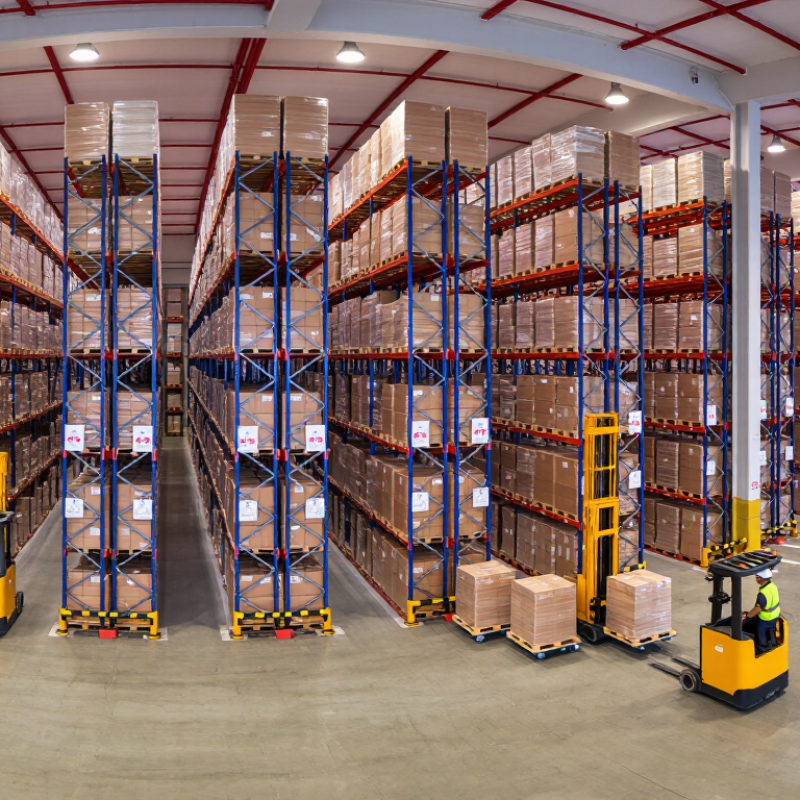
Push-back storage racks use inclined rails, wheeled carts, and gravity to move pallets toward the loading face. A forklift places each pallet from the aisle side. The next pallet pushes it deeper into the lane. During retrieval, the front pallet leaves first. This creates a last-in, first-out flow. It also reduces aisle travel and improves floor utilization.
Good design begins with seven checks: pallet dimensions, load weight, lane depth, cart capacity, rail slope, aisle clearance, and inspection access. Most lanes hold two to six pallets, but deeper lanes can slow retrieval. Racking must match the pallet, not an ideal drawing. RMI’s ANSI MH16.1 guidance emphasizes verified structural loads, anchorage, and impact protection. Those details matter when forklifts work beside loaded lanes. Space matters. So does visibility.
The 2024 MHI Annual Industry Report found that 55 percent of respondents planned to increase technology investment. It also reported that 83 percent viewed supply chains as vulnerable. That pressure encourages denser storage, but density alone is not efficiency. Operators should separate fast-moving and slow-moving products, confirm LIFO suitability, and label every lane clearly. A warehouse assessment should test actual pallet weights, damaged wheels, rail noise, and uneven loading. Push-back racks can look simple. They are not. A rushed design may save floor space while creating slower, less predictable work.
Choosing push back storage racks starts with the warehouse, not the rack catalogue. Measure clear height, column spacing, aisle width, and floor levelness. A layout that looks efficient on paper may leave forklifts turning awkwardly near corners. Leave practical clearance for pallet movement, sprinklers, lighting, and maintenance access. Small measurement errors become expensive after installation.
Load capacity must match the heaviest planned pallet, not the average one. Record pallet weight, height, width, and depth for every product group. Check whether loads are evenly distributed or concentrated near one edge. Rack levels can carry different loads, so calculate each beam and cart position separately. Confirm the capacity rating with a qualified rack engineer and follow the supplier’s installation instructions. Never rely on a handwritten estimate.
Pallet requirements also determine channel depth and operating safety. Push back systems commonly store pallets by depth, so confirm that pallet sizes remain consistent. Mixed dimensions can create gaps, overhang, or unstable movement. Test how the forklift approaches the first position. Watch the pallet enter and leave the channel. It should move smoothly, without sudden impact. In practice, teams sometimes choose extra depth for maximum density, then discover poor stock rotation. That decision deserves a second look. Regular inspections should check damaged frames, bent rails, missing safety components, and unusual cart resistance. Keep inspection records with dates, locations, and corrective actions.
Assess warehouse space, load capacity, and pallet requirements before selecting rack depth and configuration.
This planning example compares usable pallet positions for a 10-meter rack run with four storage levels and 1.2-meter pallet length. Deeper lanes increase storage density, but they reduce SKU selectivity and require consistent pallet sizes. Confirm the actual rack load rating, floor capacity, forklift clearance, pallet dimensions, and required safety margins with a qualified storage-system engineer.
Choosing a push back rack starts with the cart, not the steel frame. In field assessments, I measure pallet weight, load dimensions, and forklift clearance before reviewing layouts. A nested cart design can improve lane use, but it may increase rolling resistance when loads are uneven. Look for guided movement, secure stops, and wheels rated above the heaviest expected load. Small details matter. Test a loaded cart, not an empty one. I once approved a smooth prototype too quickly; cartons shifted after repeated loading.
Lane depth should match inventory rhythm. Deep lanes hold more pallets, yet they can hide aging stock and complicate access. For fast-moving goods, moderate depth often supports cleaner replenishment. For slower products, deeper storage may be practical if pallet quality stays consistent. Measure the actual pallet footprint, including damaged corners and wrap overhang. Leave operating clearance for the truck and the operator’s sightline. A calculation can look perfect on paper and still feel tight on the floor. That gap deserves a second review.
Storage configuration should reflect product variety, not only maximum capacity. Dedicated lanes suit uniform pallets and reduce handling decisions. Mixed lanes offer flexibility, but inconsistent heights can create unstable contact between carts. Separate areas by pallet size, weight range, or handling frequency where possible. Confirm beam levels, aisle width, floor condition, and load limits with qualified personnel. Record inspection points for wheels, stops, rails, and pallet condition. Staff feedback is useful here. Operators notice hesitation and vibration before a spreadsheet does. Recheck the design after seasonal volume changes.
Tip one: Confirm the rack’s rated load for every beam level and pallet position. Loads must match pallet dimensions, not just total weight. Tip two: Require upright guards, row spacers, and rear stops where forklifts operate nearby. OSHA 1910.176 requires stored materials to remain stable and aisles clear. Tip three: Schedule documented inspections after impacts, relocations, or unusual loading. Do not guess. ANSI MH16.1 guidance supports engineered rack design and controlled installation.
Tip four: Compare access carefully. Push-back racks improve storage density, but operators usually load and retrieve from one aisle. Narrow aisles may increase travel distance and forklift conflict points. Tip five: Check cart and pallet compatibility before purchasing. A damaged wheel or uneven pallet can interrupt trolley movement. Keep it practical. Tip six: Match the system to rotation needs. Push-back storage naturally favors LIFO, making it suitable for stable, nonperishable inventory. It is a weak choice for strict FIFO control unless lanes, labels, and replenishment rules are tightly managed.
Tip seven: Connect location labels with cycle counts and inspection records. The 2024 MHI Annual Industry Report found that 83% of surveyed supply-chain professionals planned to increase technology investment. That trend supports better inventory visibility, but software cannot correct poor lane discipline. In my experience, teams often overvalue density and undervalue retrieval effort. Measure both. A useful trial records retrieval time, damaged pallets, blocked positions, and near misses for several operating weeks. Then reconsider the design before expanding it.
| Tip | Selection Dimension | What to Compare | Typical Planning Data | Best Fit | Safety and Rotation Implication | Priority |
|---|---|---|---|---|---|---|
| 1 | Confirm the load profile | Compare pallet weight, pallet dimensions, load overhang, and the number of pallets stored in each lane. | Common pallet footprints include approximately 1,200 × 1,000 mm and 1,200 × 800 mm. Verify the rack rating against the actual unit load rather than the average load. | Operations with consistent pallet sizes and repeatable unit loads. | Correct load data helps prevent overloaded beams, uneven carriage loading, and pallet interference during loading or retrieval. | Critical |
| 2 | Match lane depth to inventory rotation | Compare lane depth, pallet dwell time, SKU count, and whether the operation follows first-in, first-out or last-in, first-out handling. | Push-back storage is generally suited to multiple pallets of the same SKU in a lane. A practical design should allow the stored pallet count to match replenishment and demand cycles. | Medium- to low-rotation products with several pallets per SKU. | Deeper lanes improve density but can make older stock less accessible. Use shallower lanes or a FIFO-oriented system when stock age is critical. | Critical |
| 3 | Evaluate safety features | Check upright guards, backstops, pallet stops, lane-entry protection, beam locks, carriage restraints, and load-retention features. | Select components that are compatible with the intended pallet size and operating equipment. Protection should be positioned where forklift impact is most likely. | Facilities with frequent forklift traffic or high pallet turnover. | Safety accessories reduce the likelihood of pallet displacement and structural impact, but they do not replace operator training, inspections, or safe operating procedures. | Critical |
| 4 | Check forklift and operator accessibility | Compare aisle width, lift-truck turning requirements, fork reach, mast height, visibility, and the clearance needed to place pallets squarely. | Aisle requirements vary by truck type and load size. Use the truck manufacturer’s published turning and operating dimensions instead of relying on a generic aisle figure. | Warehouses using reach trucks, counterbalance trucks, or other specified handling equipment. | Adequate clearance reduces collision risk, pallet damage, and failed placement attempts. Poor access can lower the rack’s usable capacity in practice. | High |
| 5 | Compare storage density with selectivity | Compare floor-space utilization, number of accessible SKUs, pallet positions, and the percentage of locations available for direct access. | Push-back racks typically provide higher selectivity than drive-in storage while using fewer aisles than standard selective pallet racks. Actual density depends on building height, lane depth, and aisle design. | Businesses seeking a balance between compact storage and direct access to front-facing lanes. | Higher density can reduce travel distance, but excessive lane depth may increase stock-aging risk and handling complexity. | High |
| 6 | Verify pallet-flow and rotation behavior | Review whether carts or rails support controlled movement, whether pallets remain separated, and whether the system permits safe loading and unloading from the operating aisle. | Push-back systems normally use nested pallets on carts or wheeled structures, allowing the next pallet to move toward the aisle when the front pallet is removed. | LIFO storage of batch-controlled goods, reserve inventory, and products stored by SKU or lot. | Define a clear loading and retrieval sequence. For products requiring strict FIFO rotation, compare pallet-flow or other FIFO-oriented solutions before selecting push-back storage. | High |
| 7 | Plan inspection, maintenance, and future change | Compare replaceable components, inspection access, adjustability, spare-part availability, expansion options, and compatibility with future pallet or truck changes. | Establish documented pre-use checks and periodic rack inspections. Inspect uprights, beams, braces, carts, rails, wheels, locks, guards, and visible deformation. | Facilities expecting SKU changes, equipment upgrades, seasonal volume changes, or phased expansion. | A maintainable design supports safer long-term operation and makes it easier to adapt lane depth, load levels, or protection features without compromising the original design basis. | High |
| Practical selection rule: Choose push-back storage racks only after confirming the building layout, rack loads, pallet condition, forklift specifications, applicable local regulations, and the required inventory-rotation method. The final rack design should be reviewed by a qualified storage-equipment or structural professional. | ||||||
Choosing push-back storage racks requires more than comparing purchase prices.
Start with actual pallet weights, dimensions, and turnover rates from your operation. Measure twice. A rack designed for uniform loads may struggle with mixed pallets or shifting cartons. Check floor flatness, aisle clearance, ceiling height, and forklift reach before approving the layout. Installation quality directly affects stability, loading speed, and future repair work. Use trained installers, verify anchors, and record every bay’s rated capacity.
Maintenance should be planned around real warehouse conditions, not ideal catalog photographs.
Dust matters. Inspect rails, rollers, stops, frames, and protectors during scheduled checks. Look for bent components, unusual noise, uneven pallet movement, or damaged labels. Clean debris from channels before it increases friction and slows retrieval. Keep critical spare parts available, but avoid storing excessive inventory that quietly ties up cash. A simple inspection log helps supervisors compare wear across bays and identify repeated handling mistakes.
We often underestimate small impacts.
Long-term operating cost includes labor, downtime, energy, repairs, training, and lost usable space.
Calculate how many touches each pallet needs, then compare that figure with alternative layouts. A cheaper rack can become expensive when operators wait for blocked lanes or manual adjustments. Ask installers to explain service intervals and replacement procedures in plain language. Request realistic load testing, not only a polished quotation. Budget for periodic re-leveling and component replacement, even when the first year seems uneventful. One assumption may be wrong. Recheck costs after three months of actual use.
Measure pallet weight, dimensions, turnover rate, forklift reach, aisle clearance, ceiling height, and floor condition. Test loaded carts. Empty carts can hide rolling resistance and shifting cartons.
Deep lanes store more pallets, but they may hide aging inventory and slow access. Moderate depth often suits fast-moving goods. Deeper lanes can work for slower products with consistent pallets.
Not always. Dedicated lanes suit uniform pallets, while mixed lanes provide more flexibility. Separate areas by pallet size, weight range, or handling frequency when practical.
Choose guided movement, secure stops, and wheels rated above the heaviest expected load. Check uneven loads carefully. Rolling resistance may increase when cartons shift.
Measure damaged corners, wrap overhang, and uneven heights, not only standard specifications. Paper calculations can look correct while the aisle feels tight. Review sightlines and operating clearance again.
Trained installers should verify anchors, beam levels, floor flatness, aisle width, and rated capacity. Record every bay. Installation quality affects stability and future repairs.
Inspect rails, rollers, stops, frames, protectors, labels, and pallet condition. Look for bent parts, unusual noise, vibration, uneven movement, and debris in channels. Dust matters.
Include labor, downtime, energy, repairs, training, replacement parts, and lost usable space. Count pallet touches. A cheaper rack may cost more when operators wait or make manual adjustments.
Review performance after about three months of actual use and after seasonal volume changes. Operator feedback matters. My earlier approval of a smooth prototype was too quick; repeated loading exposed carton movement.
Choosing the right Push-Back Storage rack begins with understanding how its inclined rails and nested pallets support high-density, last-in, first-out inventory handling. Start by reviewing your warehouse dimensions, ceiling height, forklift access, floor conditions, load weights, pallet sizes, and expected storage volume. These factors help determine the appropriate cart design, lane depth, and overall configuration while preventing wasted space or unsafe loading conditions.
Next, match the system to your operational priorities. Consider safety features such as pallet stops, guide rails, load ratings, and clear operator access. Evaluate whether last-in, first-out rotation suits your products or whether another arrangement is necessary. Finally, compare installation requirements, inspection routines, replacement-part availability, and long-term operating costs. A reliable selection should balance storage density, ease of use, inventory accessibility, maintenance demands, and future expansion so the rack system remains efficient and safe throughout its service life.

Fangjiu Rack