Wire Shelving remains a practical choice for warehouses, retail backrooms, kitchens, and utility rooms. Its open design makes stored items easy to see and allows air to circulate around them. Yet “wire shelving” covers several different products. Chrome-plated units, epoxy-coated shelves, stainless-steel systems, mobile racks, and adjustable kits each suit different conditions.
The right choice depends on more than price. Buyers should compare shelf dimensions, stated load capacity, finish, wheel quality, and assembly requirements. A dry stockroom may need a different coating from a damp wash area. Check the manufacturer’s load guidance, including whether capacity applies per shelf or to the full unit. Details matter. A rack can look sturdy and still wobble if its frame, connectors, or floor placement are unsuitable.
This guide explores the main Wire Shelving types available to global buyers in 2026, with attention to common uses and practical trade-offs. It also considers how finish, configuration, and mobility affect purchasing decisions. Product names are not always consistent across suppliers, so specifications deserve a careful read. Small differences count. No single type fits every facility, and broad comparisons can miss local needs. Verify measurements and product documentation before ordering, especially for demanding environments.
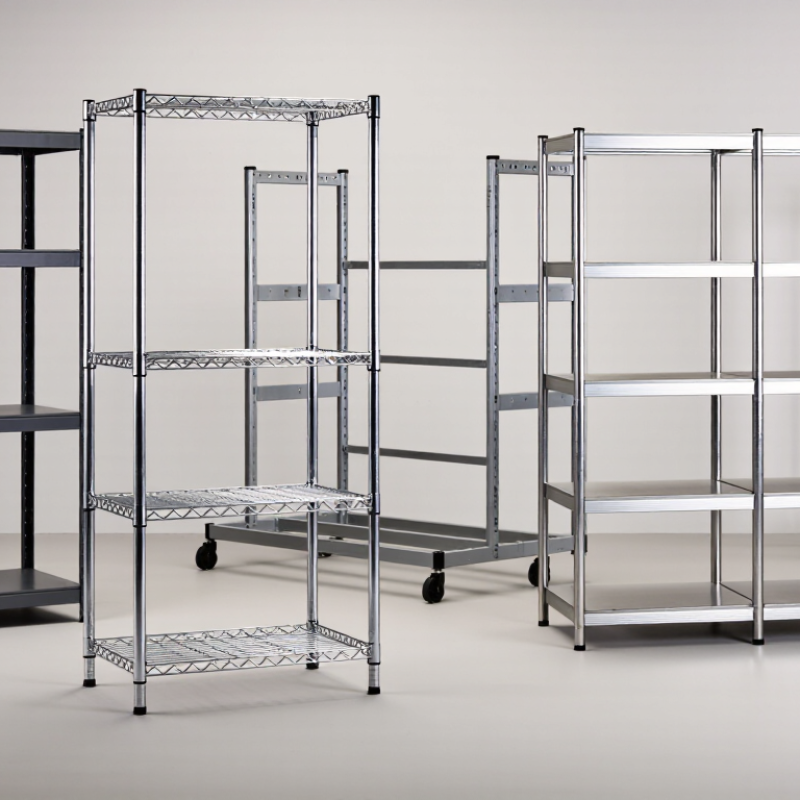
Wire shelving is an open-frame storage system built from steel rods rather than solid panels. Its usual parts are vertical posts, circular collars, and shelves formed from welded cross-wires. Tapered sleeves fit around each post; the shelf collars slide over them and lock in place. A rubber mallet often helps seat the joints. Small detail. The open grid allows airflow and makes dust or spills easier to spot, but small items may need bins.
MHI and Deloitte’s 2024 Annual Industry Report found that 55% of surveyed supply-chain leaders planned to increase technology investment over the following two years. That finding concerns supply-chain technology, not shelving performance, but it highlights why storage layouts need to adapt. Adjustable shelves can accommodate changing stock sizes without rebuilding the frame. For safe planning, check the manufacturer’s load rating and whether it applies to each shelf or the whole unit. Distribute weight evenly, especially near the posts. Not every room has a level floor. Uneven floors, heavy loads, or frequent movement can affect stability, so anchoring and levelling deserve attention before loading.
Wire shelving materials should match the room, not just the budget. Chrome-plated carbon steel suits dry stockrooms, while zinc or powder-coated finishes offer added protection in damp or frequently cleaned spaces. Stainless steel is a stronger candidate for wet areas, but grade and weld quality still matter. The International Stainless Steel Forum’s Stainless Steel in Figures 2024 reports 58.4 million tonnes of global stainless crude-steel production in 2023. That indicates broad material availability, not corrosion resistance in every setting. A scratched coating can expose the steel beneath it. Worth checking.
Load capacity needs equal care. A shelf’s rating depends on its span, support spacing, wire design, and how weight is distributed. A carton spread across the surface is not the same as a heavy part resting on one small point. World Steel Association’s World Steel in Figures 2025 reports 1,882.6 million tonnes of crude-steel output in 2024; this reflects industry scale, not the strength of a specific shelving unit. Ask suppliers for rated loads per shelf, test conditions, and allowable deflection. Check whether ratings assume evenly distributed loads, and whether the complete unit or individual shelf was tested. That distinction is easy to miss. For a real installation, leave a margin below the stated limit, especially when loads shift during restocking.
Adjustable open-wire shelving suits stockrooms, kitchens, and light-picking areas. Its open decks improve visibility and airflow around cartons and containers. Coated wire can help protect surfaces from routine wear, but it is not automatically suitable for corrosive or persistently wet environments. Heavy-duty systems handle denser cases when their rated capacities match the load. Mobile units save floor space in archives or compact storage rooms, though moving them can slow access. Every type has a trade-off.
The U.S. Census Bureau reported that e-commerce represented 15.4% of U.S. retail sales in 2023. This figure is not a shelving forecast, but it shows why accessible fulfillment storage matters.
In pick zones, open shelves make item checks easier; mobile racks can increase storage density while reducing aisle access. Check both shelf and bay capacities, and distribute weight evenly. Keep labels visible. A rack that looks sturdy may still be overloaded.
Tips: Measure cartons, aisle widths, and door clearances before ordering. Confirm the floor is level, secure units as specified, and review load ratings with the supplier.
Choosing wire shelving starts with the items you need to store, not the finish or price.
For cartons, bins, and spare parts, open-wire shelves allow air and light to move through the rack. Check shelf dimensions against the largest container, then leave room to lift it safely.
Airflow matters. Small items may need liner panels, since narrow objects can tip or slip through the grid.
Dry, temperature-controlled rooms often suit chrome-plated shelving. Damp areas, coolers, or frequent splashes usually call for an epoxy-coated finish, while stainless steel can be a better choice where regular cleaning and corrosion resistance matter.
No finish is maintenance-free. Match the coating to actual exposure, not a vague “industrial” label.
For washdown settings, check the specific unit’s material and cleaning guidance before buying.
Load capacity needs the same care. Compare each shelf’s rated capacity with its expected load, spread weight evenly, and store heavier items near the bottom. Mobile shelving helps when stock changes location, but casters need suitable floors and can reduce stability.
Measure twice. A common oversight is choosing by total rack capacity while ignoring one overloaded shelf.
Record aisle width, ceiling height, and access needs, then confirm dimensions and ratings with the technical sheet. Inventory changes; a rack that fits today may feel cramped next season.
Wire shelving looks simple, but small specification errors can create costly delays. Measure the room’s width, depth, and usable height, then allow space for doors, pipes, and hand access. Measure twice. Confirm whether dimensions refer to the shelf itself or the assembled unit. A 900 mm shelf may not fit a narrow aisle once its posts and corner guards are included. Check the rated load per shelf and per unit, and ask whether figures assume evenly distributed weight. Dense cartons or tools can concentrate force in one area.
Standards and documentation vary by destination and application. Ask suppliers for current load-test information, material details, and finish specifications, then confirm these match local project requirements. For humid storage rooms, the coating and corrosion resistance deserve attention. Shipping needs equal care: compare packed dimensions, pallet height, gross weight, and carton protection, not just the quoted freight price. A damaged corner can delay installation more than expected. Even a careful spreadsheet can miss that.
Before ordering, confirm the included parts and tools, assembly sequence, and whether wall restraints are recommended for the planned setup. Check floor level, ceiling clearance, and access for moving long posts through doorways. Keep a few spare clips if replacement parts may be difficult to obtain. Installation is usually straightforward, but instructions can leave room for interpretation. A sample unit or clear assembly photos can reveal problems early.
Vertical posts support shelves made from welded steel wires. Tapered sleeves and circular collars lock each shelf in place. A rubber mallet can help seat the joints.
It lets air and light pass through, making dust and spills easier to notice. Small parts can slip through or tip over, so use bins or liner panels. Airflow matters.
Epoxy-coated shelving often suits damp rooms, coolers, or areas with frequent splashes. Stainless steel may suit regular cleaning and corrosion resistance. No finish is maintenance-free.
Compare the expected weight with the rated capacity for each shelf, not just the whole unit. Spread heavy items evenly and keep dense cartons near the posts or lower shelves. Check the technical sheet.
Measure room width, depth, and usable height. Include doors, pipes, ceiling clearance, and space for handling containers. Measure twice. Also confirm whether listed dimensions describe the shelf or the assembled unit.
They help when stock needs to move, but casters need suitable floors and may reduce stability. An uneven floor can make a loaded unit less secure. Not always.
Compare packed dimensions, pallet height, gross weight, and carton protection. Confirm included parts, tools, and assembly steps. A damaged corner can delay setup.
Check whether wall restraints are recommended for the planned setup. Keep spare clips if replacements may be difficult to obtain. Instructions can be unclear, so assembly photos or a sample unit may reveal issues early. I might overlook that.
Wire Shelving is a versatile storage system made from connected metal wires that form open shelves supported by posts or frames. Its design allows air and light to circulate, makes stored items easy to see, and can simplify cleaning and adjustment. Materials, protective finishes, shelf dimensions, and construction all affect durability and load-bearing capacity, so buyers should consider both the weight of individual items and the total load placed on each unit.
Common Wire Shelving types include adjustable freestanding units, mobile shelves, wall-mounted systems, and configurations designed for specialized storage environments. Choosing the right type depends on available space, item size, access needs, and how frequently the layout may change. Global buyers should also check measurements, weight ratings, compatible components, applicable product standards, shipping dimensions, and installation requirements. Careful planning helps ensure that shelving fits the destination, can be assembled correctly, and supports reliable day-to-day storage.

Fangjiu Rack