Buying Steel Platforms is not simply a matter of comparing prices and dimensions. A platform may look solid in a showroom, yet perform poorly under vibration, moisture, or uneven loading. The right choice depends on verified capacity, material quality, access needs, and the environment where it will operate. Small details matter. A slippery step can create a serious workplace hazard.
This guide presents ten practical tips for evaluating suppliers and platform designs. It explains how to check load ratings, steel grades, welding quality, surface treatments, guardrails, stairs, and installation requirements. Buyers should request drawings, test records, maintenance guidance, and clear warranty terms. A reliable manufacturer should explain how its calculations were made, not merely provide a confident number. Local building, safety, and workplace requirements also deserve careful review before purchase.
Look beneath the coating.
In my experience, rushed decisions often begin with an attractive quotation. The cheapest platform may require extra bracing, frequent repairs, or costly site modifications later. That does not mean the most expensive option is automatically better. It means the comparison must include service life, inspection access, delivery conditions, and installation labor. Even experienced buyers can overlook drainage around base plates or clearance for tools. I have seen layouts that worked on paper but felt cramped during routine maintenance. That uncomfortable lesson is worth remembering. Careful questions, documented evidence, and a realistic site assessment can make Steel Platforms safer, more durable, and easier to manage.
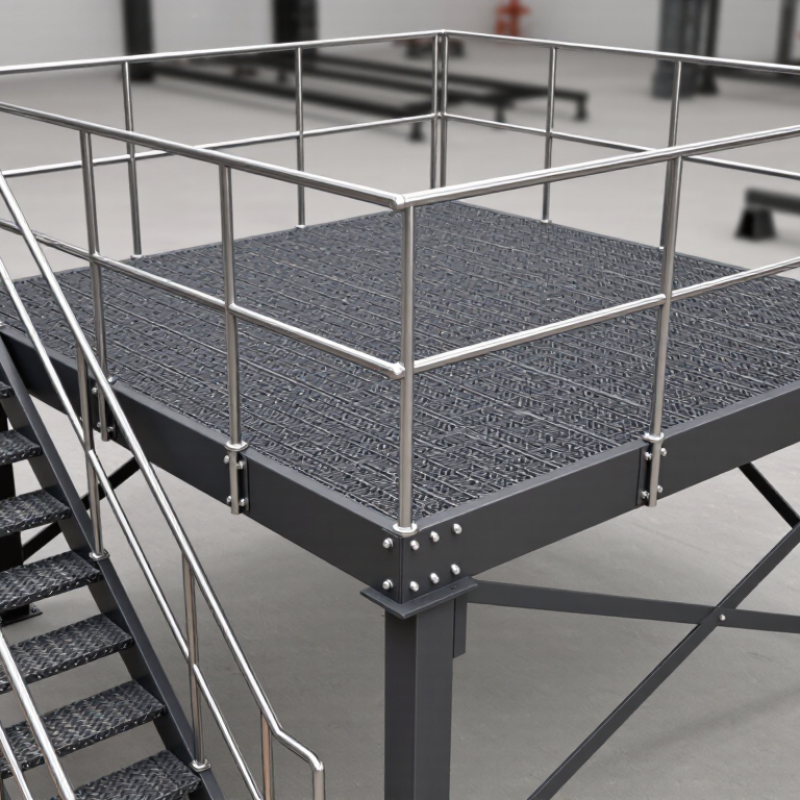
Before ordering a steel platform, define its job in one clear sentence. Will workers assemble parts, store cartons, access machinery, or handle tools? Each purpose changes the deck, stairs, guardrails, and maintenance space. A platform for occasional access may need a different layout from one used every shift. Write down the tasks. This simple record prevents vague specifications and expensive revisions.
Calculate capacity from real loads, not a rough guess. Include workers, equipment, stored materials, impact, and uneven loading. A rolling tool chest can concentrate weight on a small area. A qualified structural engineer should verify the structure, connections, anchorage, and deflection limits. Use drawings, load data, and inspection records to support the decision. I have seen projects underestimate temporary materials placed during installation. Easy to miss.
The working environment can quietly control the design. Measure floor condition, ceiling height, temperature, moisture, dust, and corrosive exposure. A dry workshop differs greatly from a humid washdown area. Specify suitable surface protection, drainage, lighting, and access clearances. Check whether forklifts, cranes, doors, or emergency routes share the space. A neat drawing is not proof of safe operation. Review the platform with actual users before fabrication, because small workflow details often expose larger design problems.
| No. | Buying Tip | Key Data to Define | Practical Guidance | Information to Confirm Before Purchase |
|---|---|---|---|---|
| 1 | Define the platform’s purpose | Access, maintenance, storage, production, loading, or equipment support | A personnel-access platform may require stairs, guardrails, and anti-slip flooring, while a storage platform may require stronger beams and higher allowable loads. | Intended task, frequency of use, equipment involved, access direction, and whether workers or materials will be present. |
| 2 | Calculate the required capacity | Uniform load, concentrated load, equipment weight, and impact or dynamic effects | Separate evenly distributed loads from point loads such as machinery feet, pallets, wheels, or stored containers. The governing load case should be used for design. | Rated live load, dead load, point-load locations, load combinations, and the structural engineer’s calculations. |
| 3 | Measure the available space | Length, width, elevation, headroom, clearances, and access envelope | Include space for stairs, ladders, gates, handrails, maintenance access, doors, conveyors, pipes, and overhead services. | Dimensioned site drawings, floor levels, obstructions, permitted projection limits, and installation tolerances. |
| 4 | Evaluate the working environment | Indoor or outdoor use, humidity, chemicals, temperature, dust, washdown, and corrosion exposure | Dry indoor areas may use a suitable painted finish. Moist, coastal, chemical, or washdown environments generally require a more protective corrosion-control system. | Exposure classification, coating system, surface preparation, drainage provisions, inspection access, and expected maintenance interval. |
| 5 | Select the appropriate steel grade and finish | Material strength, weldability, coating, galvanizing, and fire-protection requirements | The material and finish should match the structural design, fabrication method, environment, and required service life. Finish selection should not replace structural corrosion allowances. | Material certificates, coating specification, dry-film requirements where applicable, repair procedure, and inspection records. |
| 6 | Check vibration and deflection | Beam span, stiffness, equipment vibration, walking comfort, and serviceability limits | A platform can meet strength requirements yet feel uncomfortable or interfere with equipment if it is too flexible. Rotating or impact-producing equipment needs additional evaluation. | Maximum calculated deflection, natural-frequency assessment where needed, vibration data, and applicable project criteria. |
| 7 | Specify safe access and edge protection | Stairs, ladders, handrails, guardrails, toe boards, gates, and openings | Access components should be designed as part of the platform, not added after installation. Open edges, floor openings, and transfer points require particular attention. | Applicable local safety rules, guardrail and toe-board dimensions, stair geometry, gate type, clear width, and fall-protection provisions. |
| 8 | Choose suitable flooring | Grating or solid plate, slip resistance, drainage, fire risk, dropped-object control, and cleaning needs | Open grating supports drainage and visibility. Solid plate limits small-object drop-through but may retain liquids and require dedicated drainage or surface treatment. | Opening size, load rating, slip-resistant surface, removable-panel weight, drainage requirements, and housekeeping method. |
| 9 | Plan supports and foundations | Column layout, base reactions, anchorage, slab capacity, bracing, and seismic or wind effects | Existing floors and slabs must be checked for concentrated reactions and anchor forces. Freestanding platforms may need lateral bracing or additional stability measures. | Support reactions, anchor details, slab or foundation drawings, site conditions, bracing design, and installation survey requirements. |
| 10 | Verify compliance, delivery, and maintenance | Design standard, calculations, drawings, fabrication quality, installation method, inspection, and lifecycle cost | A complete purchase should cover engineering, fabrication, transport, lifting, site assembly, inspection, alterations, and future replacement of wear components. | Stamped or approved drawings where required, weld and bolt inspection records, installation instructions, load signage, maintenance schedule, and warranty terms. |
Note: Capacity, dimensions, access features, and structural details must be confirmed by a qualified engineer using the applicable local building, workplace-safety, fire, and loading requirements.
Ask for the governing regional code, readable certificates, inspection records, and designer qualifications. Request design drawings and fabrication details. A certificate alone does not prove safe installation.
Include workers, tools, stored materials, and moving equipment. Check both evenly distributed loads and concentrated point loads. A moving trolley creates different forces. Do not rely on a vague “tested for safety” statement.
Records should identify test loads, dates, results, and corrective actions. Testing should involve a competent, independent party where practical. Missing details deserve questions.
Request foundation drawings, anchor specifications, bolt grades, and torque values. Confirm guardrail dimensions and access clearances. Require level checks, fastener inspections, and a final handover record.
Inspect the supporting floor before delivery. Confirm concrete strength and locate hidden services. Wet or corrosive areas may require additional protection. A strong platform needs a strong base.
Include freight, unloading, lifting equipment, site preparation, installation labor, and protective coatings. Also budget for inspections and future repairs. The cheapest quote may exclude access equipment.
Request identical dimensions, handrails, stairs, finishes, delivery terms, and installation scope. Compare steel grades, calculations, welding procedures, and inspection records. Otherwise, the lowest figure may simply omit important work.
Check coverage periods, corrosion limits, structural defects, coating failure, and exclusions. Confirm responsibility for inspections, replacement parts, and transportation. Ask about bolt, weld, coating, and anchor-point inspections. Keep service promises in writing.
Check drainage holes, anti-slip surfaces, safe access, and corrosion protection around cut edges. Ask who may approve later modifications. Unapproved drilling creates a quiet risk. I might focus too much on steel thickness.
Buying Steel Platforms requires careful planning to ensure the structure meets operational, safety, and budget requirements. Start by defining the platform’s purpose, expected load capacity, frequency of use, and working environment. Consider whether it will be used indoors or outdoors, exposed to moisture, chemicals, heat, or heavy traffic. Then select suitable dimensions, access features, guardrails, stairs, ladders, and structural designs that support efficient movement and stable operation.
Material quality is equally important. Evaluate steel grades, protective coatings, surface treatments, and corrosion resistance according to the environment. Confirm that the platform complies with applicable safety standards, has appropriate load testing, and includes clear installation instructions. Finally, compare suppliers based on total cost rather than purchase price alone, including transportation, installation, inspections, maintenance, replacement parts, and warranty coverage. A reliable supplier should also provide responsive technical support and practical maintenance guidance. By reviewing these factors together, buyers can choose a durable, safe, and cost-effective platform that performs reliably over time.

 Fangjiu Rack